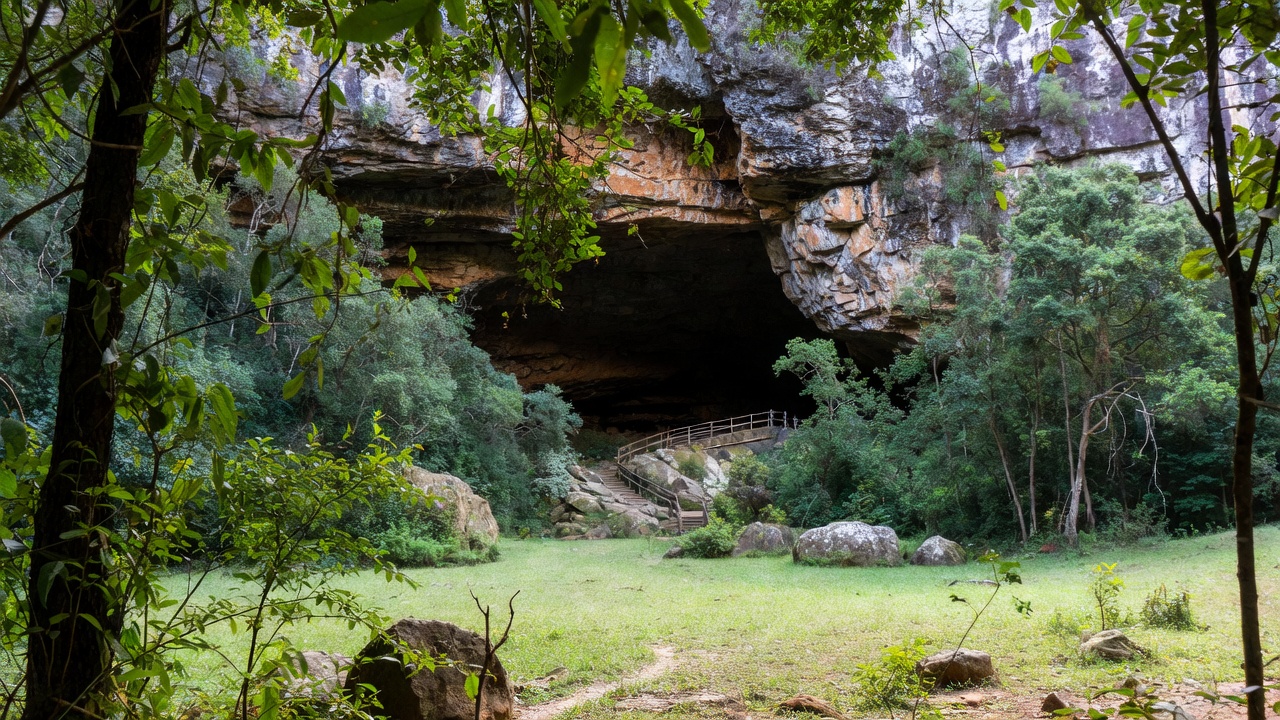
Deep in the rugged landscapes of South Africa, on the border between Mpumalanga and Limpopo provinces, lies a remarkable subterranean world known as the Echo Caves. These limestone caves are not only a remarkable geological formation but also a repository of human and natural history that stretches back millions of years. Tucked away near the small town of Ohrigstad and within sight of the scenic Panorama Route, the Echo Caves have captivated explorers, scientists, and tourists alike with their massive chambers, intricate stalactites and stalagmites, and eerie echoing sounds that give the cave its name.
The story of the Echo Caves begins not with human discovery but with ancient geological processes. The cave system is carved into Precambrian dolomite, a type of sedimentary rock that dates back roughly 3.8 billion years, making it among the oldest rock formations on Earth. It is said that such ancient bedrock was laid down when the continents were united in the supercontinent Gondwana, long before the age of humans and long before the modern shape of Africa emerged. Over deep time, water percolated through fractures and joints in the dolomite, dissolving the rock and creating extensive underground passages and caverns through a process known as karstification. Today, the Echo Caves extend for an estimated 40 kilometres underground, though only a small portion is accessible to casual visitors.
Within these cool, echoing chambers, nature has sculpted an extraordinary array of speleothems – mineral formations created by thousands of years of dripping mineral-rich water. Stalactites hang from the cave ceilings, stalagmites rise from the floors, and some formations merge into spectacular columns and flowstone walls that resemble frozen waterfalls. In several chambers, such as the Madonna Chamber and the Crystal Palace, these formations create landscapes of silent beauty, illuminated for visitors by carefully placed electric lights.
The caves are also home to unique ecosystems. Bats, beetles, and other creatures adapted to the darkness make their homes in these subterranean passages, and the sound of dripping water and distant echoes enhances the mystical atmosphere for those who venture inside.
Long before the arrival of modern explorers, the cave system was known and used by Indigenous peoples of the region. Archaeological evidence suggests that Pedi communities sought shelter within the chambers of the caves, particularly in places like the Samson Chamber, where natural columns and overhangs provided protection from the elements. These early inhabitants also used the echoing sounds produced by certain hollow stalactites as a form of natural warning system. When struck, these formations would emit echoes that carried through the cave and beyond, serving as an auditory signal to alert the community to potential danger, such as approaching groups from neighbouring areas.
Tools and artefacts dating back to the Middle and Late Stone Age, as well as the Iron Age, have been found within and around the Echo Caves. These findings provide valuable insights into the lives of early humans and their relationship with the landscape. Today, many of these items are displayed at the nearby Museum of Man, where visitors can learn about the cultural heritage of the region in conjunction with their cave tour.
The modern chapter of the Echo Caves began in 1923, when the owner of the farm Klipfonteinhoek – located near Ohrigstad – was searching for a lost source of water. To his surprise, he discovered that some of his cattle had vanished into a fissure in the ground. Upon investigation, he realised that this opening led to an extensive underground cave system filled with beautiful and unusual rock formations. Though local Indigenous peoples had known of the caves for generations, this event marked the entrance of the Echo Caves into the wider world of geological interest.
In the mid-20th century, improvements in regional infrastructure helped make the caves more accessible to travellers. The completion of the Abel Erasmus Pass and the Strijdom Tunnel in 1959 provided a reliable roadway through the Drakensberg escarpment, bringing more visitors through the northern region of Mpumalanga. That same year, the Echo Caves were opened to the public as a tourist attraction and were later declared a National Monument, ensuring their protection and recognition as a site of national heritage.
Tour operators developed guided tours that take visitors along walkways, staircases, and illuminated paths inside the cave. These tours typically last between 45 minutes and an hour and showcase a selection of monumental chambers and geological wonders. For more adventurous visitors, extended tours into deeper sections of the cave system are also an option, though these are not recommended for people suffering from claustrophobia or fear of confined spaces.
Despite the mostly peaceful allure of the caves, there have been moments of darker history. In 2023, the owner-operator of the Echo Caves was tragically murdered in a violent incident. As a result, there was uncertainty around the immediate future of the attraction. However, the Echo Caves remain a symbol of both the natural history and cultural richness of South Africa.
Today, the Echo Caves remain a popular destination for both domestic and international tourists, offering a unique combination of natural beauty, deep geological history, and cultural significance. Guided tours run daily and are suitable for most ages. While the accessible portion of the caves represents only a fraction of the full system, visitors can still experience the striking interior landscapes and learn about the cave’s formation and history from knowledgeable guides.
The site also includes on-site accommodation, a curio shop, and a restaurant, allowing visitors to extend their stay and immerse themselves fully in the experience.
For travellers planning to visit Echo Caves, there are several excellent accommodation options in the broader, particularly around White River, Ohrigstad, Sabie, and the Blyde River Canyon area, all within reasonable driving distance of the caves:
In and around White River (a common base for visitors):
Thokozani Lodge – A comfortable lodge with a welcoming atmosphere, ideal for travellers seeking relaxation after a day exploring the Panorama Route.
Hotel 247 @ White River – A well-reviewed hotel offering central access and comfortable rooms.
The Royal Palm B&B – A charming bed & breakfast in Ohrigstad itself.
Porcupine Ridge Guest House – A scenic guest house in Sabie.
Merry Pebbles Resort – A well-reviewed resort near Sabie.
Sudwala Lodge – A self-catering lodge near the Sudwala Caves, another notable cave attraction in the region.
These accommodations range from budget-friendly lodges to boutique hotels and resorts, providing options for different preferences and budgets. Staying in this region allows visitors to not only explore the Echo Caves but also experience other iconic natural sights along the Panorama Route, such as Blyde River Canyon, God’s Window, and Mac Mac Falls.
The Echo Caves of South Africa are a testament to the deep history of our planet and the rich cultural tapestry of its people. From millions-year-old geological processes to the footsteps of Indigenous peoples, and from their rediscovery in the early 20th century to their status as a cherished tourist site today, the Echo Caves offer a journey that spans time and imagination. For anyone interested in nature, history, or adventure, these subterranean wonders remain a must-visit destination in the heart of South Africa’s spectacular landscape.
Leave a Reply