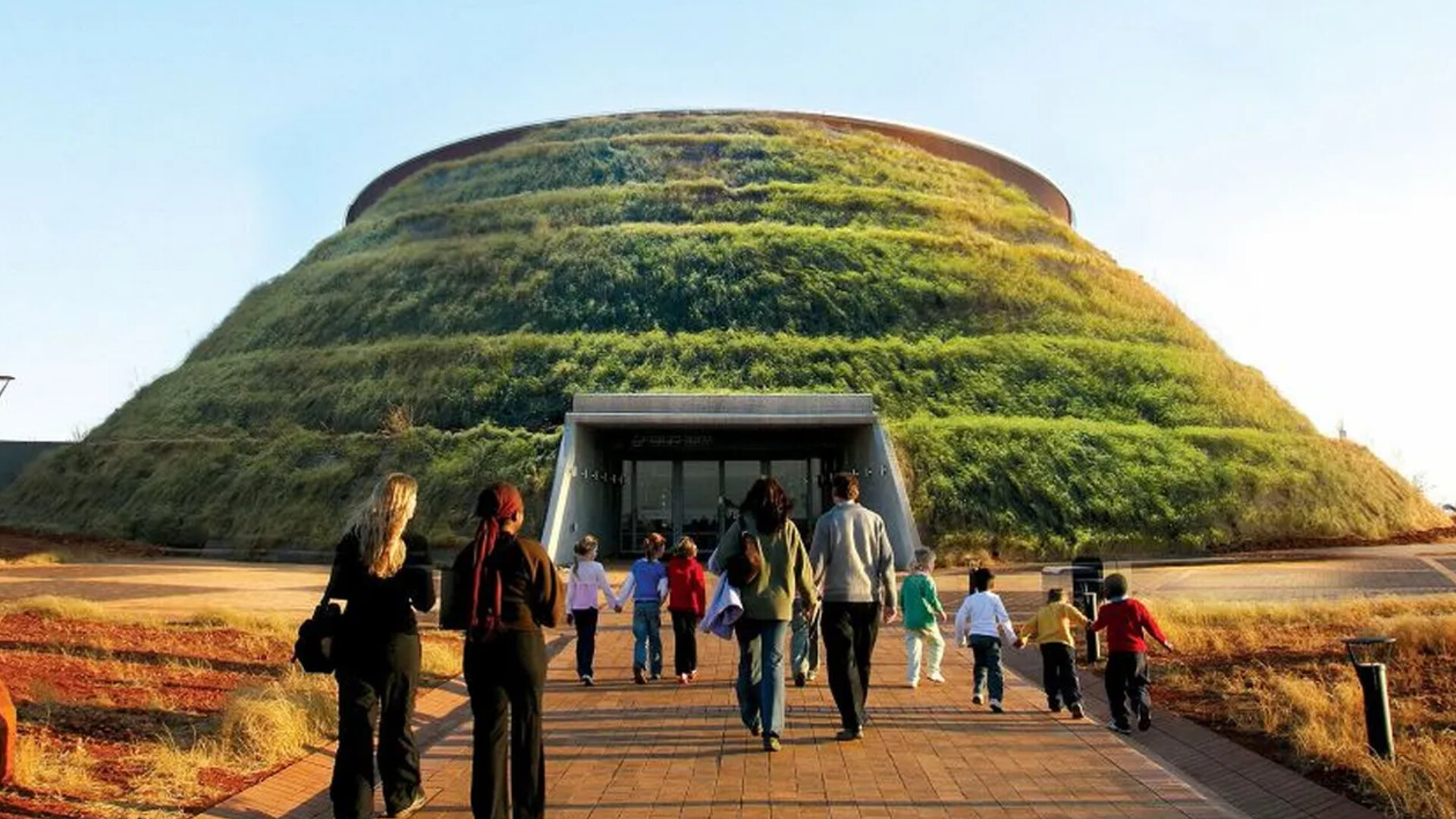
The Cradle of Humankind, located in Gauteng province near Johannesburg and Pretoria, stands as one of the most significant archaeological landscapes on Earth. Recognized as a UNESCO World Heritage Site, this extraordinary area has played a central role in reshaping global understanding of human origins. Covering more than 47,000 hectares, the Cradle is not just a single site but a vast complex of limestone caves, fossil deposits, and research locations that together tell a story spanning millions of years. It is a place where science, history, tourism, and adventure meet, allowing visitors to explore humanity’s deep past while enjoying a rich and engaging experience.
The archaeological importance of the Cradle of Humankind lies primarily in its fossil record, which contains some of the oldest and most important hominin remains ever discovered. Fossils found here date back more than three million years, making the region one of the richest sources of early human evidence anywhere in the world. Among the most famous discoveries are those from Sterkfontein Caves, often referred to as the “birthplace of humanity.” These caves have yielded fossils such as “Mrs Ples,” an Australopithecus africanus skull discovered in 1947, and “Little Foot,” one of the most complete early hominin skeletons ever found. Such discoveries have provided invaluable insight into early human anatomy, movement, and evolution.
The history of the Cradle’s discovery in modern times is closely tied to the development of South African archaeology and paleoanthropology. In the late nineteenth and early twentieth centuries, limestone mining in the area exposed fossil-rich caves. Scientists soon realized that these caves held ancient remains far older than previously imagined. Researchers such as Dr. Robert Broom and later generations of South African and international scientists dedicated decades to careful excavation and study. Their work placed South Africa at the center of global debates about where humanity originated, challenging earlier assumptions that human evolution occurred solely in other parts of the world.
Beyond its scientific value, the Cradle of Humankind has been carefully developed into a major tourist destination that balances education with enjoyment. One of its main attractions is the Sterkfontein Caves tour, where visitors descend underground to walk through chambers where fossils were found. Guided tours explain the geological processes that preserved these remains and the methods scientists use to uncover them. The experience is immersive, combining natural beauty, dramatic cave formations, and storytelling that brings ancient history to life.
Another major feature of the Cradle is the Maropeng Visitor Centre, a modern, world-class museum designed to make complex scientific ideas accessible to the public. Through interactive exhibits, audiovisual displays, and hands-on activities, visitors learn about the origins of the universe, the development of life on Earth, and the evolution of early humans. The museum emphasizes that the story of humanity is shared by all people, reinforcing themes of unity and common heritage. For families, students, and casual tourists, Maropeng transforms archaeology from an abstract academic subject into a vivid and memorable experience.
The Cradle of Humankind is also a place of enjoyment beyond museums and caves. The surrounding landscape is rich in natural beauty, featuring rolling hills, grasslands, and wildlife. Visitors can enjoy hiking trails, cycling routes, and picnic areas, making the site appealing to nature lovers as well as history enthusiasts. This combination of outdoor recreation and archaeological exploration makes the Cradle unique, as visitors can spend an entire day learning, walking, and relaxing in a single location.
From an educational perspective, the Cradle plays a crucial role in inspiring interest in science and history, particularly among young people. School tours and educational programs are regularly hosted at the site, introducing learners to archaeology, geology, and evolutionary biology in an engaging way. By seeing real excavation sites and fossils, students gain a deeper appreciation for scientific research and critical thinking. This educational function ensures that the Cradle’s impact extends far beyond tourism, contributing to long-term knowledge development in South Africa.
Economically and socially, the Cradle of Humankind has brought significant benefits to surrounding communities. Tourism has created jobs in guiding, hospitality, conservation, and education. Local businesses such as guesthouses, restaurants, and craft markets have grown as a result of increased visitor numbers. In this way, archaeology becomes not just a study of the past but a resource for present and future development. The site demonstrates how cultural heritage can be preserved while also supporting livelihoods.
The Cradle of Humankind also carries deep symbolic importance. It reminds visitors that humanity has a shared origin rooted in Africa, reinforcing Africa’s central place in global history. This understanding challenges outdated narratives and promotes pride in African heritage. For South Africans in particular, the Cradle stands as a powerful reminder that their land holds stories that belong to all of humanity, stories that connect the distant past to the modern world.
The Cradle of Humankind is far more than an archaeological site; it is a living classroom, a tourist destination, and a symbol of human unity. Its ancient fossils have transformed scientific understanding of human evolution, while its modern facilities allow people from all walks of life to explore and enjoy this knowledge. By combining deep historical significance with interactive experiences and natural beauty, the Cradle of Humankind offers visitors the rare opportunity to walk in the footsteps of early humans while having an enriching and enjoyable experience. It is a place where the story of humanity truly begins, making it one of South Africa’s most important and rewarding destinations to visit and explore.
Leave a Reply