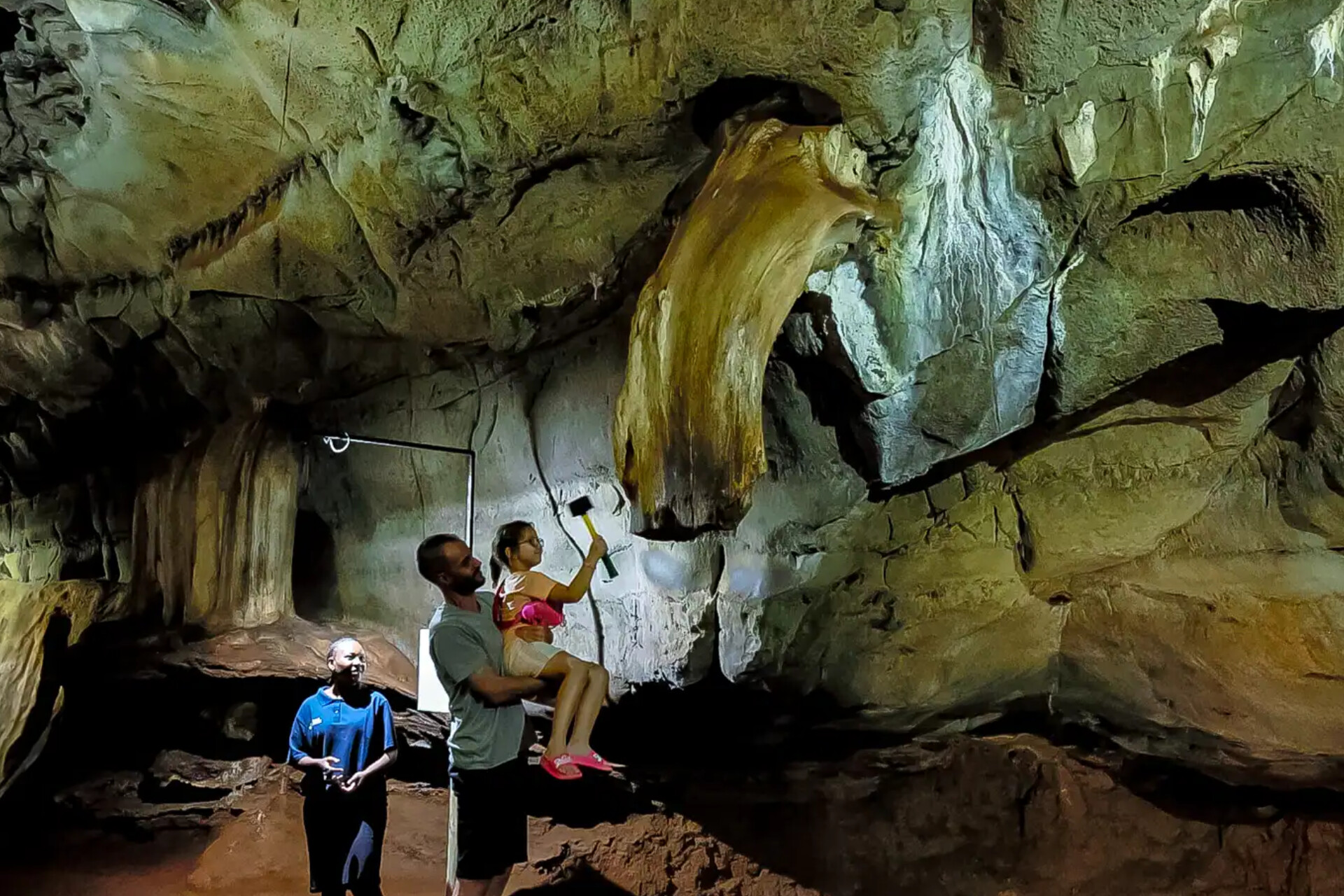
Sudwala Caves stand among South Africa’s most fascinating natural tourism attractions, offering visitors a rare opportunity to explore one of the oldest known cave systems on Earth. Located near Nelspruit (Mbombela) in Mpumalanga, close to the Sudwala Nature Reserve and the Panorama Route, these caves combine deep geological history with accessible tourism infrastructure. Unlike many cave systems that emphasise mystery or difficulty, Sudwala Caves are renowned for being both ancient and visitor-friendly, making them a popular destination for families, school groups, history enthusiasts, and travellers seeking a unique underground experience.
The geological significance of Sudwala Caves is central to their appeal. The caves are estimated to be over 240 million years old, forming during the Precambrian era when the region was still part of the ancient supercontinent Gondwana. Unlike limestone caves such as Echo Caves, Sudwala is composed primarily of dolomite and marble, giving the formations a distinctive appearance. Over vast periods of time, slow-moving underground water sculpted chambers, tunnels, and caverns that today form a stable and well-preserved subterranean landscape. For tourists, this extreme age adds a powerful sense of time and continuity, making a visit feel like a journey deep into Earth’s distant past.
Tourism at Sudwala Caves is structured around guided exploration. Visitors enter the cave system through a natural opening and follow illuminated pathways into massive chambers supported by natural rock pillars. The most prominent of these is the Cathedral Chamber, an immense cavern capable of accommodating hundreds of people. This chamber is frequently used for concerts, events, and private functions, thanks to its natural acoustics and constant temperature of around 17 degrees Celsius. For tourists, standing inside this chamber is often the highlight of the visit, as it demonstrates the sheer scale and stability of the cave system.
Guided tours form the core visitor activity at Sudwala Caves. Knowledgeable guides lead groups through the accessible sections of the caves, explaining the geological processes that shaped the formations, the mineral composition of the rock, and the significance of different chambers. These tours are designed to be educational while remaining engaging and suitable for a broad audience. Visitors learn about stalactites, stalagmites, flowstone, and other formations, as well as the differences between Sudwala and other cave systems in South Africa. The guided format ensures safety while enhancing appreciation of the underground environment.
For visitors seeking more adventure, Sudwala Caves also offers Crystal Tour experiences. These extended tours take participants deeper into the cave system, beyond the standard tourist routes, into narrower passages and less-developed chambers. Equipped with helmets and headlamps, visitors crawl, climb, and squeeze through sections that reveal untouched crystal formations and remote caverns. This adventure option appeals particularly to thrill-seekers and those looking for a more immersive, hands-on experience of the underground world. It adds an important dimension to Sudwala’s tourism appeal by catering to both casual visitors and adventure enthusiasts.
Beyond the caves themselves, the surrounding Sudwala Nature Reserve enhances the overall visitor experience. Walking trails lead through indigenous forest and rocky terrain, offering scenic views and opportunities for birdwatching and photography. These above-ground activities allow visitors to combine cave exploration with outdoor recreation, making Sudwala an appealing half-day or full-day destination. Picnic areas and rest facilities further support relaxed, family-friendly tourism.
The historical and archaeological context of Sudwala Caves adds depth to the tourism experience. The caves were known and used by Indigenous communities long before modern tourism development. During periods of conflict in the 19th century, the caves served as a refuge for local groups seeking protection from raids and warfare. Oral traditions and historical accounts suggest that people used the caves for shelter, storage, and strategic defence. While much of this history is not visible in the form of artefacts within the tourist sections, guides often share these stories, helping visitors understand the human significance of the caves beyond their geological features.
Modern tourism development at Sudwala began in the early 20th century, when the caves were formally explored and opened to the public. Infrastructure such as walkways, lighting, and safety features was added carefully to preserve the cave environment while making it accessible. Today, Sudwala Caves are privately managed, with a strong emphasis on conservation, safety, and education. This balance between accessibility and preservation has contributed to their longevity as a tourism attraction.
Accommodation options near Sudwala Caves support both short visits and extended stays. Within close proximity, Sudwala Lodge offers chalets and self-catering units set in natural surroundings, making it a convenient choice for visitors who want to stay near the caves. The lodge environment complements the nature-based experience, allowing guests to relax after exploring the underground chambers. Campsites and budget-friendly options are also available in the area, appealing to backpackers and adventure travellers.
The nearby city of Mbombela (Nelspruit) provides a broader range of accommodation options, from guesthouses and boutique hotels to larger lodges and resorts. Establishments such as Matumi Golf Lodge, Sheppard Boutique Hotel, and Christina’s Guest House are popular among visitors combining Sudwala Caves with other attractions in Mpumalanga. Staying in Mbombela also allows easy access to restaurants, shopping centres, and transport routes, making it a practical base for exploring the region.
Sudwala Caves are often included in broader tourism itineraries that feature the Panorama Route, Blyde River Canyon, and Kruger National Park. Their location makes them an ideal stop for travellers moving between these major destinations. Tour operators frequently offer packaged tours that include Sudwala Caves as part of a multi-attraction experience, highlighting their role as a complementary destination rather than a standalone site.
Educational tourism plays an important role at Sudwala Caves. School groups, university students, and researchers regularly visit the caves to study geology, earth sciences, and environmental management. Interpretive materials and guided explanations support learning outcomes, making the caves a valuable resource for experiential education. This educational function strengthens Sudwala’s position as more than a visual attraction, framing it as a place of learning and discovery.
Sudwala Caves represent a unique tourism destination that combines extreme geological age, accessible exploration, adventure activities, and historical significance. Through guided tours, adventure experiences, nature trails, and nearby accommodation, visitors are offered multiple ways to engage with this ancient underground world. The caves’ location within Mpumalanga’s broader tourism landscape enhances their appeal, making them a natural addition to any regional itinerary. As one of South Africa’s oldest and most enduring cave attractions, Sudwala Caves continue to captivate visitors by offering not only a glimpse into the Earth’s distant past but also a well-rounded, memorable tourism experience rooted in exploration and discovery.
Leave a Reply