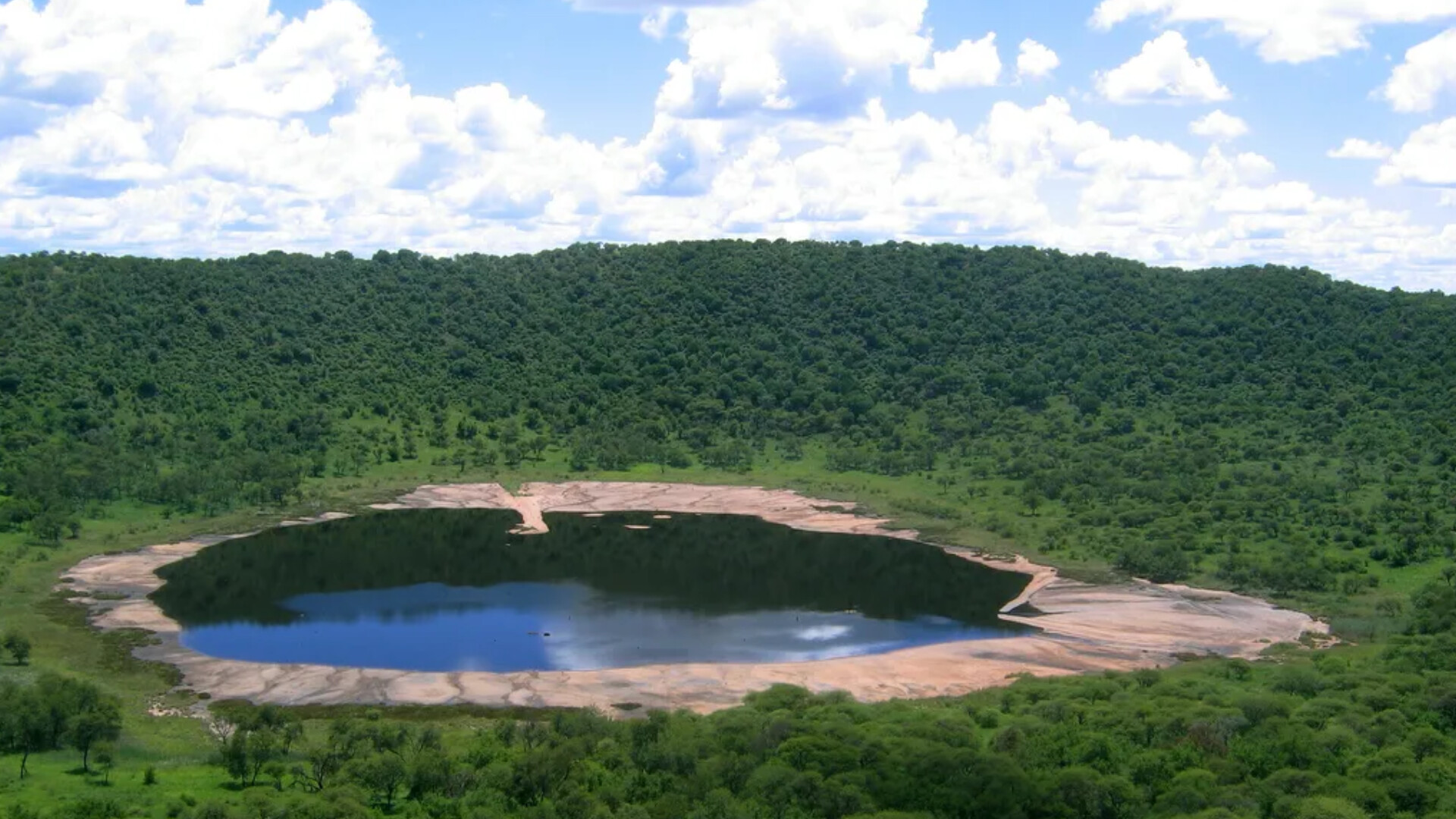
Tswaing Meteorite Crater, located just north of Pretoria in Gauteng province, is one of South Africa’s most remarkable natural and archaeological heritage sites. Unlike many archaeological locations shaped solely by human activity, Tswaing tells a story that begins with a dramatic cosmic event and continues through thousands of years of human interaction with the landscape. Formed approximately 220,000 years ago by the impact of a large meteorite, Tswaing has since become a place of deep cultural, economic, and scientific importance. Today, it offers visitors a rare combination of geology, archaeology, history, and outdoor recreation, making it both educational and enjoyable to explore.
The formation of Tswaing Crater was a powerful natural event that reshaped the land. The meteorite impact created a circular crater about 1.13 kilometers in diameter and more than 100 meters deep. Over time, the crater filled with water, forming a salt-rich lake at its center. The surrounding environment gradually stabilized, creating a unique ecosystem within the crater walls. For archaeologists and scientists, Tswaing provides an invaluable natural archive, preserving layers of sediment that record environmental changes over tens of thousands of years.
Human interaction with Tswaing began thousands of years ago, making it an important archaeological site. Evidence suggests that Stone Age communities visited the crater to exploit its rich salt resources. Salt was a highly valuable commodity, essential for preserving food and maintaining health. Archaeological remains such as stone tools and pottery fragments indicate repeated visits by different groups over long periods. Later, Iron Age communities continued to harvest salt, integrating Tswaing into regional trade networks that extended across the Highveld.
The cultural significance of Tswaing is also reflected in its name, which means “Place of Salt” in Setswana. This name highlights the central role the crater played in the lives of surrounding communities. Salt extraction was not merely an economic activity but also carried social and cultural meaning. Control of salt resources could enhance status and influence, and the site likely served as a meeting point for exchange and interaction among different groups. Exploring Tswaing today allows visitors to appreciate how natural features shaped human behavior and economic systems.
Modern discovery and scientific study of Tswaing began in the twentieth century, when researchers recognized its meteorite origin and archaeological value. Since then, the site has been protected as a nature reserve and heritage area. Ongoing research continues to reveal new information about both the impact event and human use of the crater. This dual scientific importance makes Tswaing unique, as it contributes to knowledge in fields ranging from archaeology and anthropology to geology and climate science.
For visitors, Tswaing Meteorite Crater offers an engaging and enjoyable experience. A well-maintained trail leads down into the crater, allowing visitors to walk through changing vegetation zones as they descend. Guided tours provide detailed explanations of the crater’s formation, the archaeological evidence of salt mining, and the cultural traditions associated with the site. Reaching the crater floor is a memorable experience, giving visitors a sense of the scale and power of the original impact.
The Tswaing Visitor Centre adds another layer of enjoyment and education. Exhibits explain the science behind meteorite impacts, the archaeological findings at the site, and the traditional uses of salt by local communities. Interactive displays make the information accessible to visitors of all ages, while picnic areas and shaded resting spots encourage relaxation and social interaction. This thoughtful design ensures that Tswaing appeals not only to scholars but also to families, school groups, and casual tourists.
Nature lovers also find much to enjoy at Tswaing. The crater supports a diverse range of plant and animal life, including bird species that thrive around the salt lake. The contrast between the surrounding Highveld grasslands and the sheltered crater interior creates a visually striking environment. Hiking, photography, and birdwatching are popular activities, allowing visitors to combine outdoor fun with historical exploration.
Educationally, Tswaing plays an important role in demonstrating how archaeology and natural science intersect. It shows that human history cannot be separated from environmental context, as natural features often determined where people lived, traded, and gathered resources. For students and learners, Tswaing provides a concrete example of how scientific evidence is used to reconstruct both natural events and human behavior over deep time.
Economically, the development of Tswaing as a tourist destination has benefited nearby communities through job creation and local business opportunities. Guides, conservation staff, and service providers all contribute to maintaining the site while sharing its stories with visitors. This sustainable approach helps ensure that Tswaing remains protected while continuing to educate and entertain future generations.
Tswaing Meteorite Crater is a place where the forces of the universe and the ingenuity of human societies come together in a single landscape. Its ancient impact crater tells a dramatic geological story, while its archaeological remains reveal how people adapted to and benefited from this unique environment. As a visitor destination, Tswaing offers a rare blend of science, history, and outdoor enjoyment. By walking its trails and learning its stories, visitors gain a deeper appreciation for the complex relationship between nature and human civilization, making Tswaing one of South Africa’s most fascinating and rewarding heritage sites to explore.
Leave a Reply