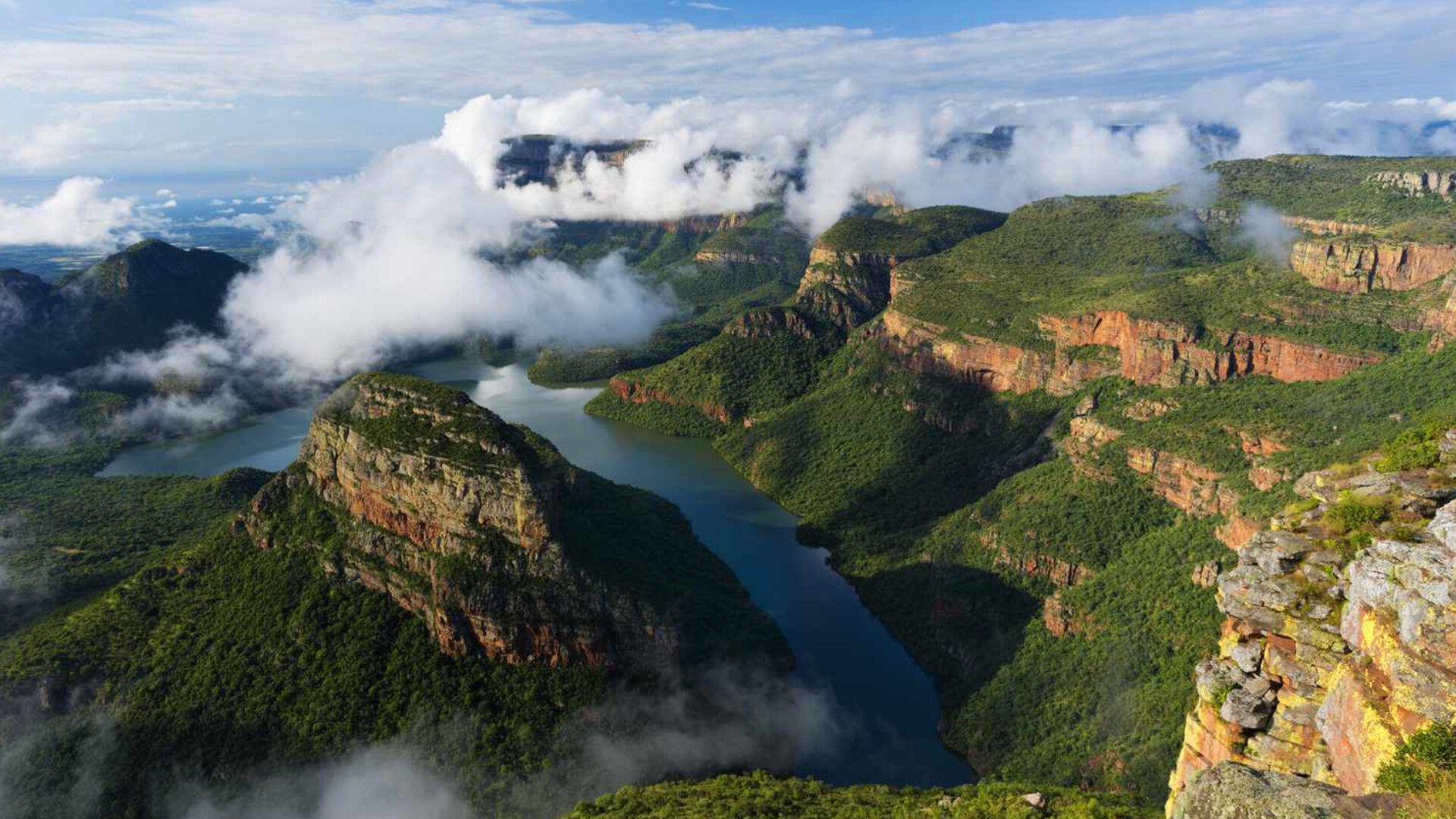
The Blyde River Canyon, carved deep into the escarpment of Mpumalanga, is celebrated as one of the largest green canyons on Earth. Its dramatic cliffs, lush vegetation, and winding river have long made it a major natural attraction. Yet beyond its scenic beauty lies a more unsettling reputation. Certain areas within and around the canyon are widely regarded as zones of unexplained physical disturbance, where visitors report disorientation, strange bodily sensations, and irregular behavior of electronic instruments. These anomalies have earned parts of the canyon the informal title of an “energy zone,” a term that reflects the difficulty of fitting the experiences neatly into conventional scientific explanations.
Geologically, the Blyde River Canyon is extraordinarily complex. The Tour Guide told us that the canyon cuts through some of the oldest rock formations in southern Africa, including quartzite, sandstone, and dolomite layers that have been folded, fractured, and reshaped over billions of years. This long and turbulent geological history has created zones of intense mineral concentration, including iron-rich and magnetite-bearing rocks. While magnetic minerals are known to influence compasses, the reported disturbances in the canyon appear inconsistent in both strength and location, occurring sporadically rather than uniformly across known magnetic formations.
Visitors have described a wide range of physical sensations in these zones. Some report dizziness, headaches, or a sudden sense of pressure, while others experience a feeling of lightness or heightened alertness. Compasses may spin unpredictably, and GPS devices occasionally lose accuracy or momentarily fail. Cameras and mobile phones have also been reported to malfunction briefly before returning to normal. While skeptics attribute these experiences to psychological suggestion or environmental factors such as altitude and temperature, the persistence and consistency of similar reports from unrelated visitors make the phenomenon difficult to dismiss entirely.
From a physical perspective, one possible contributing factor is the canyon’s unique interaction with atmospheric conditions. The steep cliffs and deep valleys create complex wind patterns, pressure changes, and temperature gradients that can affect human balance and perception. Sudden gusts, shifts in air density, and echoes can subtly disorient the senses, especially in exposed areas near cliff edges. However, these factors alone do not fully explain reports of instrument interference, leaving room for ongoing debate and investigation.
The canyon’s acoustics add another dimension to its mystery. Sound behaves unusually in certain parts of the landscape, carrying farther than expected or seeming to originate from indeterminate directions. This can create an unsettling sense of spatial distortion, particularly in foggy or overcast conditions when visual cues are limited. Combined with the canyon’s immense scale, these sensory anomalies can produce powerful psychological effects that blur the line between physical and perceptual experience.
Despite, or perhaps because of, these unexplained qualities, the Blyde River Canyon is a highly accessible and popular destination for visitors. Located along the famous Panorama Route, it is well connected by roads and surrounded by established viewpoints, hiking trails, and visitor facilities. This accessibility allows a wide range of travelers to experience the canyon’s beauty and its more enigmatic aspects without needing specialized equipment or extreme preparation.
Visitors can explore the canyon through a variety of activities. Viewpoints such as God’s Window, Three Rondavels, and Bourke’s Luck Potholes offer dramatic perspectives and are often cited as areas where unusual sensations are reported. Standing at these overlooks, with vast drops and sweeping views, many visitors describe an overwhelming sense of scale that can feel almost physically immersive. Hiking trails descend into the canyon, allowing closer interaction with the landscape and a deeper appreciation of its geological complexity.
For those seeking more active engagement, river activities such as boat cruises on the Blyde Dam provide a different vantage point. From the water, the canyon walls rise sharply overhead, amplifying the sense of enclosure and verticality. Some visitors report feeling particularly affected in these narrow sections, where sound, shadow, and reflection interact in unusual ways. Whether these sensations are purely emotional or partially physical remains an open question.
The canyon is also a haven for wildlife and plant diversity, which adds a grounding counterpoint to its mysterious reputation. Birdwatchers may spot rare species, while botanists are drawn to the unique mix of subtropical and montane flora. These living systems thrive within the same geological framework that produces the canyon’s anomalies, reminding visitors that mystery and life often coexist rather than conflict.
Accommodation options in the area range from lodges perched along the escarpment to campsites nestled in forested valleys. Many establishments cater specifically to travelers exploring the Panorama Route, making it easy to combine visits to the canyon with nearby waterfalls, caves, and historical sites. Guided tours are widely available and often include discussions of both the canyon’s scientific background and the local legends that surround it.
Ultimately, the Blyde River Canyon energy zone occupies a fascinating intersection between known geology and unexplained experience. While science offers partial explanations for some of the reported phenomena, no single theory accounts for all of them. For visitors, this uncertainty enhances rather than detracts from the experience. The canyon becomes not just a place to observe, but a place to feel, where the land itself seems to exert an influence that is subtle yet profound. In standing on its edges or moving through its depths, one is reminded that even in well-studied landscapes, nature retains the capacity to surprise and unsettle.
Leave a Reply