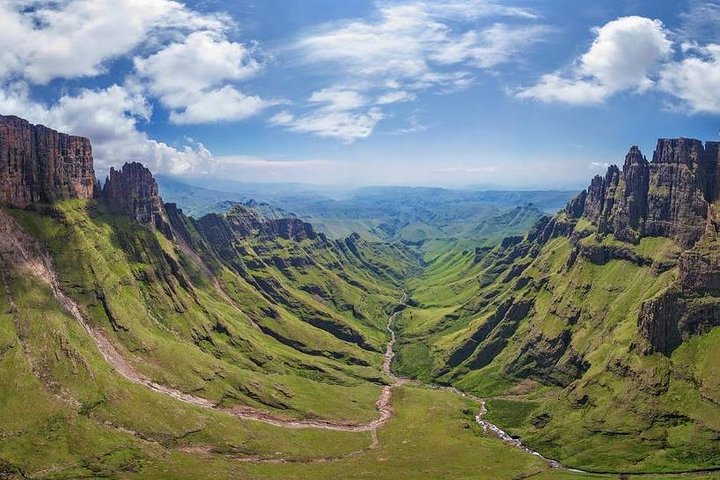
The Drakensberg Mountains form one of South Africa’s most dramatic and rewarding natural tourism landscapes, stretching over 1,000 kilometres along the eastern edge of the country through KwaZulu-Natal and the Free State. Known locally as uKhahlamba, meaning “Barrier of Spears,” the range is characterised by towering basalt cliffs, rolling alpine grasslands, deep valleys, and cascading waterfalls. For visitors, the Drakensberg offers far more than scenic beauty. It is a destination where outdoor adventure, cultural exploration, relaxation, and heritage tourism intersect, making it one of the most versatile and enduring attractions in southern Africa.
Tourism in the Drakensberg is deeply shaped by its striking geography. The mountains rise sharply from surrounding plains, creating breathtaking escarpments that dominate the skyline and provide panoramic views that stretch for hundreds of kilometres on clear days. These dramatic landscapes form the foundation for a wide range of visitor activities, from gentle nature walks to challenging multi-day hikes. Well-marked trails and managed reserves ensure that both casual tourists and experienced adventurers can explore the mountains safely and comfortably.
Hiking is the most popular activity in the Drakensberg and a primary reason many visitors travel to the region. Trails vary in length and difficulty, catering to families, solo travellers, and serious mountaineers. Short walks lead to waterfalls, forested ravines, and scenic viewpoints, while longer routes take hikers deep into the high berg, where dramatic cliffs and open plateaus dominate the landscape. Popular hiking areas such as Royal Natal National Park, Cathedral Peak, Giant’s Castle, and Monk’s Cowl are well developed for tourism, offering clear signage, guided hikes, and visitor centres that enhance the overall experience.
The Drakensberg is also a premier destination for rock art tourism, hosting the largest and most concentrated collection of San rock paintings in Africa. These ancient artworks, created by hunter-gatherer communities over thousands of years, are found in caves and rock shelters throughout the range. Guided rock art tours are a major attraction, allowing visitors to explore sites such as those in the Giant’s Castle area while learning about the spiritual beliefs, daily life, and symbolic traditions of the San people. These archaeological treasures elevate the Drakensberg beyond a scenic destination, transforming it into a living museum of human history and creativity.
Adventure tourism plays a significant role in the region’s appeal. Rock climbing, abseiling, trail running, mountain biking, and horse riding are all popular activities, supported by the rugged terrain and wide open spaces. In winter, higher elevations occasionally experience snowfall, attracting visitors eager to witness the rare sight of snow in South Africa. This seasonal diversity ensures that the Drakensberg remains attractive throughout the year, offering different experiences depending on weather and visitor interests.
Waterfalls are another major drawcard for tourists. The Drakensberg is the source of many of South Africa’s rivers, and rainfall combined with steep terrain creates numerous spectacular falls. Attractions such as Tugela Falls, one of the highest waterfalls in the world, draw visitors from across the globe. Viewing Tugela Falls from below or hiking to the plateau above it offers unforgettable experiences and has become a bucket-list activity for many travellers. Smaller falls scattered throughout the region provide quieter, more intimate encounters with nature.
Accommodation options in the Drakensberg are diverse and form an essential part of its tourism infrastructure. Visitors can choose from luxury mountain resorts, family-friendly lodges, rustic chalets, self-catering cottages, and campsites located within or near protected areas. The Cavern Drakensberg Resort & Spa, Cathedral Peak Hotel, and Champagne Castle Hotel are among the most well-known establishments, offering high-quality accommodation, guided activities, and panoramic mountain views. These resorts cater to travellers seeking comfort, relaxation, and organised experiences within a natural setting.
For visitors who prefer independence and affordability, self-catering options and national park chalets provide convenient access to hiking trails and scenic areas. Royal Natal National Park, for example, offers chalets and campsites that allow visitors to stay close to iconic attractions such as the Amphitheatre and Tugela Gorge. Smaller guesthouses and farm stays throughout the foothills provide personalised hospitality and opportunities to engage with local communities.
Cultural tourism also enriches the Drakensberg experience. The mountains form part of a UNESCO World Heritage Site known as the uKhahlamba-Drakensberg Park, recognised for both its natural beauty and cultural significance. Guided cultural tours introduce visitors to traditional Zulu heritage in surrounding villages, including music, dance, crafts, and storytelling. These experiences provide meaningful context for the landscape and promote community-based tourism that benefits local residents.
Photography and scenic sightseeing are central to tourism in the Drakensberg. Viewpoints, mountain passes, and valley roads provide countless opportunities for capturing dramatic light, changing weather, and sweeping vistas. Sunrise and sunset are particularly popular times for photography, as shadows and colours transform the rugged terrain into constantly shifting visual compositions. Even visitors who do not engage in strenuous activities can enjoy the mountains through scenic drives and short walks.
The Drakensberg’s appeal as a tourism destination is also enhanced by its accessibility. Located within a few hours’ drive of major cities such as Durban and Johannesburg, the region is well connected by road and supported by established tourism services. This accessibility makes it suitable for weekend escapes as well as longer holidays, attracting both domestic and international travellers.
Archaeological findings across the Drakensberg highlight its long history of human interaction. Stone tools, settlement remains, and rock art sites demonstrate that the mountains were not barriers but lived-in landscapes that supported generations of people. For modern tourists, this deep history adds a sense of continuity and meaning to the experience, reinforcing the idea that the Drakensberg is not merely scenery but a cultural landscape shaped by both nature and humanity.
The Drakensberg Mountains represent one of South Africa’s most complete and rewarding tourism destinations. With their combination of outdoor adventure, cultural heritage, scenic beauty, and diverse accommodation, the mountains offer something for every type of visitor. Whether hiking beneath towering cliffs, exploring ancient rock art, relaxing at a mountain lodge, or simply admiring the landscape, visitors to the Drakensberg engage with a place that is both timeless and dynamic. As a destination rooted in natural grandeur and enriched by human history, the Drakensberg continues to stand as a pillar of South Africa’s tourism identity.
Leave a Reply