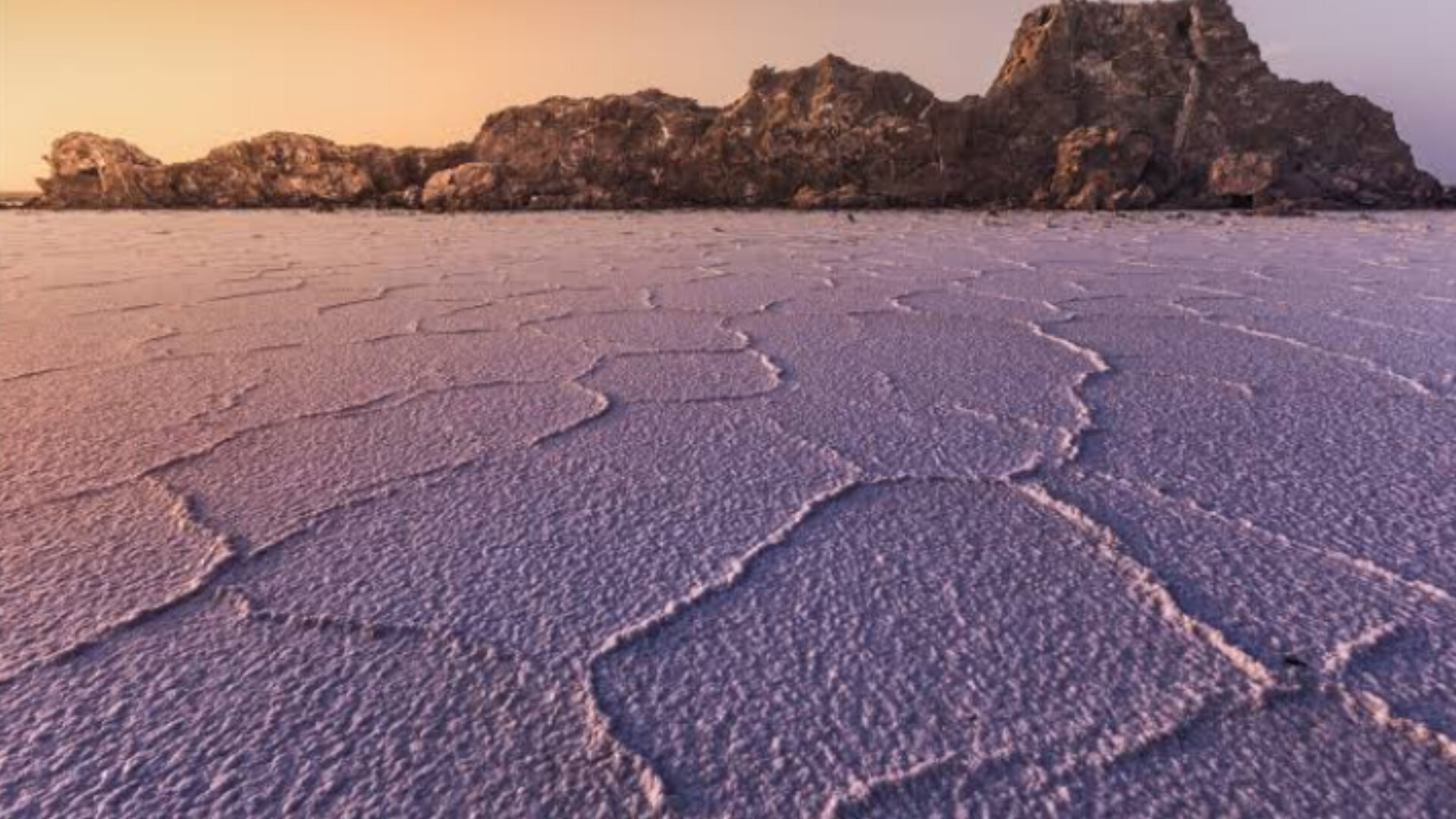
Stretching across thousands of square kilometres in the northeastern part of the country, these vast salt flats form one of the largest salt pan systems on Earth. At first glance, the pans appear empty and lifeless, an endless expanse of white earth blending seamlessly into the sky. Yet beneath this apparent simplicity lies a landscape shaped by deep geological time, seasonal transformation, and a delicate balance between harshness and abundance. The Makgadikgadi Pans are not only a natural wonder but also an immersive destination that offers visitors a rare sense of scale, solitude, and connection to the ancient rhythms of the planet.
Geologically, the Makgadikgadi Pans are the remnants of a massive prehistoric lake that once covered much of northern Botswana. This ancient lake, known as Lake Makgadikgadi, is believed to have been one of the largest inland bodies of water in Africa, fed by rivers such as the Okavango, Zambezi, and Chobe. Over tens of thousands of years, tectonic shifts and climate changes altered river courses, gradually cutting off the water supply. As the lake dried up, minerals were left behind, crystallising into thick layers of salt and clay. What remains today are vast, flat pans such as Ntwetwe Pan and Sua Pan, whose blinding whiteness reflects sunlight and creates mirage-like illusions that can disorient even experienced travellers.
Despite their arid appearance, the Makgadikgadi Pans are far from lifeless. Their true magic reveals itself through seasonal change. During the dry season, the pans are stark and otherworldly, offering a lunar-like landscape where the horizon seems infinite and silence feels almost physical. This is a time when visitors come to experience the profound emptiness, sleep under stars unobstructed by trees or hills, and feel the humbling vastness of open space. The dry pans are ideal for quad biking, guided walks, and photography, allowing travelers to explore safely while appreciating the subtle textures of cracked earth, salt crusts, and shifting light.
When the rains arrive, however, the Makgadikgadi undergo a dramatic transformation. Seasonal rainfall fills shallow depressions across the pans, creating temporary lakes and wetlands. Almost overnight, life returns. Grasses sprout, insects emerge, and birds arrive in astonishing numbers. Flamingos, both greater and lesser species, descend on the pans to breed, turning sections of the landscape pink with their presence. This phenomenon makes the Makgadikgadi one of the most important flamingo breeding sites in southern Africa. Alongside the birds come zebras, wildebeest, and other herbivores, participating in one of Africa’s largest zebra migrations, second only to the great migrations of East Africa.
This seasonal abundance also attracts predators, including lions, cheetahs, and hyenas, creating a dynamic ecosystem that challenges the idea of deserts as barren places. The contrast between dry-season emptiness and wet-season vitality is one of the Makgadikgadi’s most compelling qualities, reminding visitors that life in extreme environments often operates in cycles rather than constants. For travelers, timing a visit can offer two entirely different experiences of the same place, each equally powerful in its own way.
Human history is deeply intertwined with the Makgadikgadi Pans. Archaeological evidence suggests that early human populations lived around the shores of the ancient lake tens of thousands of years ago, relying on its water and resources. Today, the region remains home to communities such as the San people, whose ancestors adapted to these harsh conditions through deep environmental knowledge and sustainable survival strategies. Cultural encounters in the Makgadikgadi provide visitors with insight into traditional tracking skills, storytelling, and ways of life that have persisted for generations. These interactions add a human dimension to the landscape, grounding its vastness in lived experience and cultural continuity.
From a tourism perspective, the Makgadikgadi Pans offer a unique kind of adventure that differs from conventional safari destinations. Rather than dense wildlife sightings at every turn, the appeal lies in immersion and atmosphere. Activities such as walking safaris, horseback riding across the pans, and sleeping under the open sky on raised platforms allow visitors to engage directly with the environment. Nights in the Makgadikgadi are particularly unforgettable, with minimal light pollution revealing one of the clearest night skies in the region. The Milky Way stretches vividly overhead, reinforcing the sense of isolation and timelessness that defines the pans.
Environmentally, the Makgadikgadi Pans play an important role in regional ecological balance. They act as seasonal catchment areas for water, support migratory species, and contribute to biodiversity that extends beyond their immediate boundaries. Conservation efforts in the region focus on balancing tourism, wildlife protection, and community involvement. Sustainable tourism models have helped ensure that visitors can experience the pans without damaging their fragile surfaces or disrupting wildlife patterns.
In essence, the Makgadikgadi Pans are a place where extremes coexist. They are ancient yet ever-changing, harsh yet nurturing, empty yet full of meaning. For those who visit, the experience often transcends traditional ideas of sightseeing. Standing on the pans, surrounded by nothing but sky and earth, many travelers describe a profound sense of perspective, as if time itself has slowed down. This emotional resonance, combined with geological significance and seasonal spectacle, makes the Makgadikgadi Pans one of Botswana’s most extraordinary natural wonders and a destination that lingers long after the journey ends.
Leave a Reply