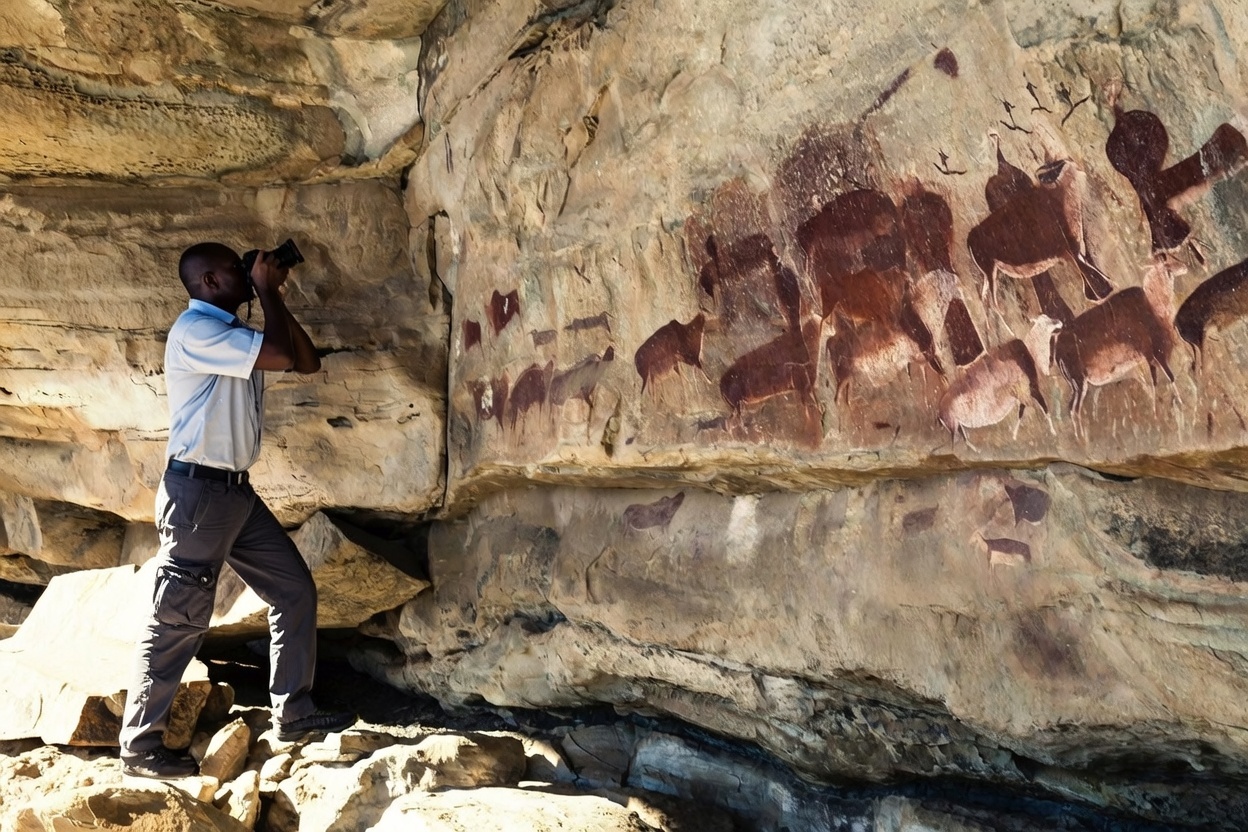
The Drakensberg Rock Art Sites, spread across the dramatic mountain ranges of KwaZulu-Natal and the Eastern Cape, represent one of the richest and most extensive collections of rock art in the world. Recognized as part of a UNESCO World Heritage Site, these painted rock shelters preserve thousands of images created by the San people over several thousand years. More than simple decoration, the rock art of the Drakensberg reflects deep spiritual beliefs, social practices, and ways of understanding the natural world. Today, these sites offer visitors a unique blend of archaeology, cultural insight, outdoor adventure, and scenic beauty, making them both meaningful and enjoyable to explore.
The archaeological significance of the Drakensberg rock art lies in its extraordinary detail and symbolic depth. The paintings depict animals such as eland, antelope, and birds, as well as human figures engaged in dancing, hunting, and ritual activities. Archaeologists and anthropologists interpret many of these scenes as representations of spiritual experiences, including trance dances and connections with the spirit world. The consistency of themes across wide areas suggests shared belief systems and long-standing cultural traditions among San communities.
Dating of the rock art indicates that some paintings are several thousand years old, with different styles reflecting changes over time. Earlier works tend to be finely detailed and naturalistic, while later paintings sometimes incorporate new elements, possibly reflecting interaction with other communities. These layers of artistic expression allow researchers to trace cultural continuity and adaptation, making the Drakensberg a valuable record of human history and creativity.
Modern recognition and preservation of the Drakensberg rock art began in the twentieth century, when systematic documentation highlighted its global importance. Conservation efforts have since focused on protecting both the paintings and the surrounding landscapes. The integration of archaeology and environmental preservation ensures that visitors experience the rock art in its original context, surrounded by the mountains, valleys, and rivers that shaped the life of the San people.
For visitors, the Drakensberg rock art sites offer an immersive and active experience. Many rock shelters are accessible via guided hikes, which combine physical activity with cultural discovery. Walking through the mountains to reach a painted shelter enhances the sense of exploration and adventure. Knowledgeable guides explain the meanings behind the images, helping visitors appreciate the complexity and sophistication of San belief systems.
The experience of viewing the rock art is both educational and emotionally powerful. Standing in a rock shelter and seeing paintings created thousands of years ago creates a direct link between past and present. Visitors often describe a sense of reverence and wonder, recognizing that these images were part of living traditions rather than isolated artworks. This emotional engagement makes the Drakensberg rock art particularly memorable.
Beyond archaeology, the Drakensberg region offers numerous recreational opportunities. The mountains are known for their hiking trails, waterfalls, wildlife, and panoramic views. Visitors can combine rock art tours with activities such as mountain hiking, birdwatching, and photography. This combination of cultural heritage and outdoor fun makes the Drakensberg an ideal destination for travelers seeking both learning and adventure.
Educationally, the Drakensberg rock art sites play a crucial role in preserving and sharing the cultural heritage of the San people. Interpretive centers and guided tours provide context, explaining how the art relates to hunting practices, spiritual beliefs, and social organization. These educational efforts help ensure that the knowledge embedded in the paintings continues to be understood and respected by future generations.
The economic benefits of rock art tourism also support conservation and local communities. Guided tours, accommodation, and related services create employment opportunities while encouraging sustainable tourism practices. By valuing the rock art as a living heritage, these initiatives promote long-term preservation rather than exploitation.
The broader significance of the Drakensberg rock art lies in its ability to communicate complex ideas through visual storytelling. The paintings demonstrate that early communities possessed rich symbolic systems and sophisticated artistic skills. For visitors, this challenges simplistic views of ancient societies and highlights the depth of human creativity and spirituality.
The Drakensberg Rock Art Sites are a powerful testament to humanity’s ability to express meaning, belief, and identity through art. Their archaeological importance, combined with the breathtaking natural environment, makes them one of South Africa’s most rewarding heritage destinations. By exploring these sacred landscapes, visitors gain insight into ancient storytelling traditions while enjoying the beauty and adventure of the Drakensberg mountains.
Leave a Reply